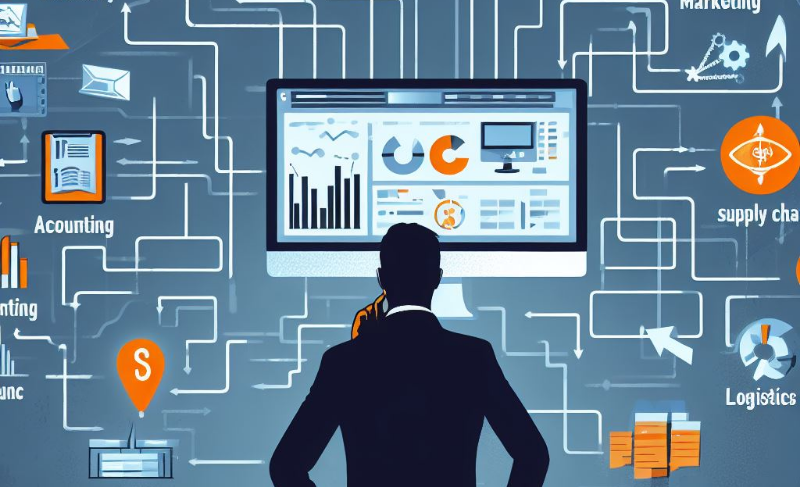
Businesses today operate in a highly competitive and complex environment that demands efficient management of resources and data. This is where an ERP (Enterprise Resource Planning) system plays a crucial role. ERP is a software solution that integrates various core business processes, facilitating seamless communication and collaboration across departments.
Improved Efficiency
One of the primary reasons why businesses need ERP is to enhance operational efficiency. ERP streamlines and automates routine tasks, reducing manual effort and minimizing the risk of errors. By eliminating redundant processes and consolidating data, businesses can save time, improve productivity, and make informed decisions based on real-time information.
Enhanced Data Accuracy
Data is a valuable asset for businesses, and maintaining its accuracy is crucial. ERP ensures data integrity by centralizing information into a single database, eliminating data duplication and discrepancies. This helps businesses maintain consistency across various departments and enables accurate forecasting, financial reporting, and inventory management.
Improved Collaboration
In today's interconnected world, effective collaboration is essential for business success. ERP facilitates seamless communication and collaboration across departments by providing a unified platform. It allows employees to access real-time information, share updates, and collaborate on projects, thereby improving overall efficiency and decision-making.
Better Customer Service
Customer satisfaction is a key driver of business growth and profitability. ERP enables businesses to provide better customer service by maintaining a centralized customer database. This allows businesses to track customer interactions, resolve issues promptly, and personalize their offerings, leading to enhanced customer satisfaction and loyalty.
Scalability and Flexibility
As businesses grow and evolve, their software requirements also change. ERP systems offer scalability and flexibility, allowing businesses to adapt to changing needs. Whether it's adding new modules, integrating with third-party software, or expanding to new locations, ERP provides the necessary agility to manage growth effectively.
Cost Savings
Implementing an ERP system may require an upfront investment, but it offers long-term cost savings. By streamlining processes, reducing operational inefficiencies, and improving decision-making, businesses can cut costs and optimize their resources. Additionally, ERP eliminates the need for multiple standalone systems, reducing maintenance and integration costs.
In conclusion
ERP is no longer a luxury but a necessity for businesses looking to thrive in today's competitive landscape. From improved efficiency and collaboration to enhanced data accuracy and cost savings, ERP provides a multitude of benefits. By embracing ERP, businesses can streamline their operations, gain a competitive edge, and position themselves for long-term success.