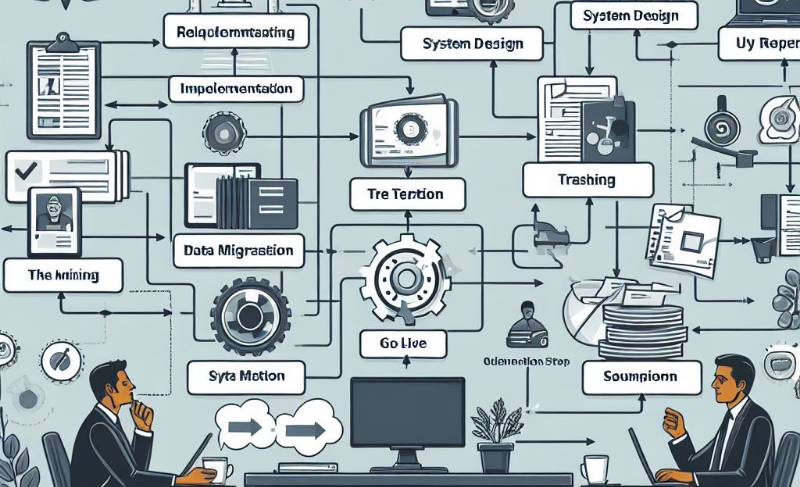
Engma recently announced their successful implementation of the Enterprise Resource Planning (ERP) system, aimed at streamlining their business operations and improving overall efficiency. The ERP deployment process followed a well-defined procedure, ensuring a smooth transition and integration of the new system into Engma's existing infrastructure.
Engma's initial step in the ERP deployment process was thorough planning and analysis. The company evaluated their existing processes, identified pain points, and defined their goals and desired outcomes for the ERP system. This laid a strong foundation for a successful implementation.
After the planning phase, Engma conducted extensive research to select the most suitable ERP solution for their business needs. They considered factors such as scalability, compatibility, customer support, and cost-effectiveness. The chosen ERP system aligned with Engma's long-term business strategy and provided the necessary modules for various departments within the organization.
Engma's next crucial step was to prepare their existing data and infrastructure for ERP integration. They cleaned and standardized their data, ensuring its accuracy and consistency. The company also upgraded their hardware and software infrastructure to meet the requirements of the new system.
With the groundwork laid, Engma proceeded with the actual implementation of the ERP system. The company involved key stakeholders and dedicated implementation teams to oversee different aspects of the deployment. They customized the ERP modules according to their specific business processes, conducted extensive testing, and ensured compatibility with existing software and tools.
Engma's employees were provided with comprehensive training on the new ERP system to ensure a smooth transition. The training sessions covered various aspects such as system navigation, module usage, and data input. Engma also appointed dedicated support personnel to address any queries or technical issues that arose during and after the implementation.
The successful deployment of the ERP system at Engma has led to significant improvements in their overall business operations. The system has enabled better inventory management, efficient order processing, enhanced communication between departments, and improved data analysis and reporting capabilities. Engma's decision to implement an ERP system has proven to be a game-changer, positioning them for future growth and success in the competitive market.